
The Iraqi government claimed Thursday that ISIS militants had “bulldozed” the renowned Nimrud archaeological site in the north of the country.
The country’s Ministry of Tourism and Antiquities said in a statement posted on its Facebook page that the terror group continues to “defy the will of the world and the feelings of humanity”. The statement did not elaborate on the extent of the damage to the site.
Axel Plathe, the director of UNESCO’s Iraq office, tweeted that the attack was an “appalling attack on Iraq’s heritage”, while Iraqi archaeologist Lamia al-Gailani told the BBC that ISIS was “erasing our history.”
The government’s claim came days after a video released by ISIS showed militants using sledgehammers to smash ancient artifacts kept in a museum in Iraq’s northern city of Mosul. Statements made by men in the video described the treasures as symbols of idolatry that should be destroyed.
Experts said the reported destruction of the ancient Assyrian archaeological site located just south of , recalled the Taliban’s annihilation of large Buddha statues in Afghanistan in 2001, experts said.
Nimrud was the second capital of Assyria, an ancient kingdom that began in about 900 B.C., partially in present-day Iraq, and became a great regional power. The city, which was destroyed in 612 B.C., is located on the Tigris River just south of Iraq’s second largest city, Mosul, which was captured by the Islamic State group in June.
The late 1980s discovery of treasures in Nimrud’s royal tombs was one of the 20th century’s most significant archaeological finds. After Iraq was invaded in 2003, archaeologists were relieved when they were found hidden in the country’s central Bank — in a secret vault-inside-a-vault submerged in sewage water.
Last year, the militants destroyed the Mosque of the Prophet Younis — or Jonah — and the Mosque of the Prophet Jirjis, two revered ancient shrines in Mosul. They also threatened to destroy Mosul’s 850-year old Crooked Minaret, but residents surrounded the structure, preventing the militants from approaching.
via ISIS militants ‘bulldozed’ ancient archaeological site, Iraqi ministry says | Fox News.
Archives
All posts for the month March, 2015
Like dew You fall upon me,
I am drenched in Your holiness,
And aglow,
Transformed by Your Light.
Your sweetness woos me,
Even as I lower my eyes,
Beholding my own wretchedness.
“Fear not,” say You,
I yield my defenses.
Your desire for me
Inspires my desire for You,
And my being drinks in Your Presence.
Lightly You settle in me,
Warming me through and through.
In time I will look like You.
©2013 Joann Nelander
All rights reserved
True Medical Rarity: Baby Born Inside Amniotic Sac.Newser) – Silas Johnson recently entered the world through emergency cesarean section at Cedars-Sinai Medical Center in Los Angeles, but what makes his case truly extraordinary is that he was born at 26 weeks with his amniotic sac still perfectly intact around him, holding the placenta and umbilical cord as well, reports KHON2. “It was a moment that really did, even though it’s a cliche, [make us catch] our breath,” says neonatologist William Binder. “It really felt like a moment of awe.” Mom Chelsea Philips had no idea until her mom showed her a picture later. “He was kind of in a fetal position and you could see like his arms and his legs curled up,” she says. “It was actually really cool to see, and when I heard that was actually really rare, I was like, oh my gosh, you’re a special little baby.”
In fact, it’s in just 1 in 80,000 births or so that the thin, tough membrane still covers part of a newborn’s body, and it’s typically the head, reports the San Francisco Chronicle. But being born “en caul,” as it’s called, where the entire body is still surrounded by the sac (with the placenta providing oxygen), is a true medical rarity most OB-GYNs will never see. The doctor “was in awe when the baby just popped out completely enclosed,” per a Cedars-Sinai statement. “They had just a short amount of time to get the baby out of the sac and … he had to puncture the sac with his fingers.” Silas, now nearly 3 months old, is healthy and expected to leave the hospital around his due date next month. (One girl was born in China last year at 23 weeks.)

<a href=’http://www.lifenews.com/2013/04/10/babies-born-alive-during-abortions-more-common-than-you-think/?utm_content=buffer8dc47&utm_medium=social&utm_source=twitter.com&utm_campaign=buffer’>Babies Born Alive During Abortions More Common Than You Think | LifeNews.com</a>.
On March 29, Live Action covered the debate in the Florida legislature on a bill that would require doctors to give medical care, including transport to a hospital, to babies who are born alive during abortion procedures. A Planned Parenthood representative attempted to answer questions on why Planned Parenthood opposed this legislation. In a shocking video, she said that the decision about what to do with a living, breathing, born infant should be up to the doctor and the woman having the abortion. In other words, it should be permissible to kill that baby.
The belief that once a baby is marked for abortion, he should be killed regardless of whether he is in the womb or out of it is shocking to many people. But how common is the phenomenon of babies born alive after abortions? The truth is, we don’t know. It is likely that most of the cases never come to light. But enough of them have been documented to show that it does happen. In the upcoming series of articles, I will highlight some cases where babies were born during abortion procedures and were denied the right to life.
In 1999, “Baby Hope” was born despite the fact that her mother was in the middle of an abortion procedure. The facts are as follows.
Abortionist Dr. Martin Haskell was performing a partial-birth abortion on a young woman. In a partial-birth abortion, just like in the more commonly used D&E abortion, the woman’s cervix is dilated with laminaria, which are small sticks that gradually expand. She is then sent home. The actual killing and removal of the baby is usually done a day or two after the insertion of the laminaria, after they have been given time to work.
In this particular case, after leaving the clinic, the woman began experiencing cramps and went to the emergency room of Bethesda North Medical Center in Cincinnati, where she gave birth to a living baby girl. According to an article in The Southeast Missourian, the baby was put into a dish and set aside to be disposed of. Nurse Shelly Lowe witnessed the baby gasping and moving after she was told to take “it” to the lab. She reportedly said, “I don’t think I can do that[.] … This baby is alive.”
The doctors refused to give any medical care to the baby, who was estimated to be at least 22 weeks old. Lowe named the child Hope and held her until she died, wrapping her in a blanket and singing to her. Lowe said, “I wanted her to feel that she was wanted. … She was a perfectly formed newborn, entering the world too soon through no choice of her own.”
Baby Hope lived for three hours with no medical care, while local Lowe held her and other nurses watched. According to the article “The Story of Baby Hope” by Liz Townsend:
“Hospital workers who cared for Baby Hope report continuing feelings of sadness and grief, but also peace — “peace that she was comforted, held close, and even sang to until she took her last breath,” according to nurse Connie Boyles. Emergency room technician Shelly Lowe held the baby until she died three hours and eight minutes after her birth. “I sat and held her. I felt no one should die alone,” said Lowe at an April 20 news conference held by local pro-life groups. “We had her baptized. I named her Hope because I’d hoped she would make it.”

My Shalom, My Shalom,
Reigning over the waters,
Conquering the watery depths,
Making clear,
Revealing by discernment
Benefactor or maleficence.
Quieted soul,
Ever vigil heart,
Desirous of My Holy Body,
Gazing through the fiery flame
Serene against the tumult,
Drinking from the Chalice of My Blood,
Covenanted through my Sacred Cross,
Lifted high above the world,
Rest in Me,
As I, Myself, pass as flaming brazier,
Between the broken pieces of your life.
My Shalom, My Shalom,
I call you
By My All Holy Name,
To dwell secure in Love.
Cost counted, chosen,
And placed in the balance.
Infinity pays the price
And tips the scale of Life to
Favor a son of God.
©2012. Joann Nelander
Jo (@TrumpetingAngel) tweeted at 10:34am – 3 Mar 15:
Netanyahu speech to US CONGRESS youtube.com/watch?v=lELXyn… via @YouTube (https://twitter.com/TrumpetingAngel/status/572812343824011264?s=17)
Joann Nelander
lionessblog.com

- Yad vashem
Stolen name replaced by number,
Savaged soul and broken heart.
Hell, a people to encumber.Blind eyes outside in darkness.
Dead souls dismissed the human face.
Stolen name replaced by numberRising from the ashes,
Pledging nevermore.
Hell, a people to encumberYad VaShem, the vault of memory,
Yad VaShem, the ground of tears
Stolen name replaced by numberShoah: families, children.
Here named, remembered, mourned
Hell, a people to encumberFaces pictured in the silence.
Tears cried forevermore.
Stolen name replaced by number
Hell, a people to encumberCopyright Joann Nelander
(experimental Villanelle)
These remarks were delivered at Brigham Young University, January 23, as part of BYU’s on-going “Faith, Family and Society” lecture series.
“Henry Ford is often quoted as saying, “History is bunk.” That’s not quite accurate. What he actually told the Chicago Tribune in 1916 is this: “I wouldn’t give a nickel for all the history in the world. It means nothing to me. History is more or less bunk. It’s tradition. We don’t want tradition. We want to live in the present, and the only history that’s worth a tinker’s damn is the history we make today.”
It’s hard to imagine a better statement of the American spirit, or at least a certain strain in our national character. The Founders clearly understood the value of the past. Most were Christians. Nearly all were religious believers. They revered the memory of Roman law, architecture, and republican process. But they also very consciously intended to create a novus ordo seclorum—a “new order of the ages.”
And they succeeded. Tocqueville describes the difference between democracy and all the forms of political and social life that came before it as a gulf between “two distinct humanities.” Democratic man is very different from his ancestors—or so we’re led to believe. So it’s no surprise that Americans tend to be poor students of history. We enjoy nostalgia because it’s a kind of entertainment. But the real events of the real past come with annoying baggage. We can’t reinvent ourselves in the present if we’re dragging around a history of inconvenient duties and facts. The good news is that this is part of our genius. We innovate because we’re not crushed by the weight of our memories. The bad news is that it leads to forgetting things we need to remember. And amnesia is dangerous both for individuals and for nations.”
Read more: via The Great Charter at 800 | Charles J. Chaput | First Things.
These remarks were delivered at Brigham Young University, January 23, as part of BYU’s on-going “Faith, Family and Society” lecture series.
“Henry Ford is often quoted as saying, “History is bunk.” That’s not quite accurate. What he actually told the Chicago Tribune in 1916 is this: “I wouldn’t give a nickel for all the history in the world. It means nothing to me. History is more or less bunk. It’s tradition. We don’t want tradition. We want to live in the present, and the only history that’s worth a tinker’s damn is the history we make today.”
It’s hard to imagine a better statement of the American spirit, or at least a certain strain in our national character. The Founders clearly understood the value of the past. Most were Christians. Nearly all were religious believers. They revered the memory of Roman law, architecture, and republican process. But they also very consciously intended to create a novus ordo seclorum—a “new order of the ages.”
And they succeeded. Tocqueville describes the difference between democracy and all the forms of political and social life that came before it as a gulf between “two distinct humanities.” Democratic man is very different from his ancestors—or so we’re led to believe. So it’s no surprise that Americans tend to be poor students of history. We enjoy nostalgia because it’s a kind of entertainment. But the real events of the real past come with annoying baggage. We can’t reinvent ourselves in the present if we’re dragging around a history of inconvenient duties and facts. The good news is that this is part of our genius. We innovate because we’re not crushed by the weight of our memories. The bad news is that it leads to forgetting things we need to remember. And amnesia is dangerous both for individuals and for nations.”
Read more: via The Great Charter at 800 | Charles J. Chaput | First Things.


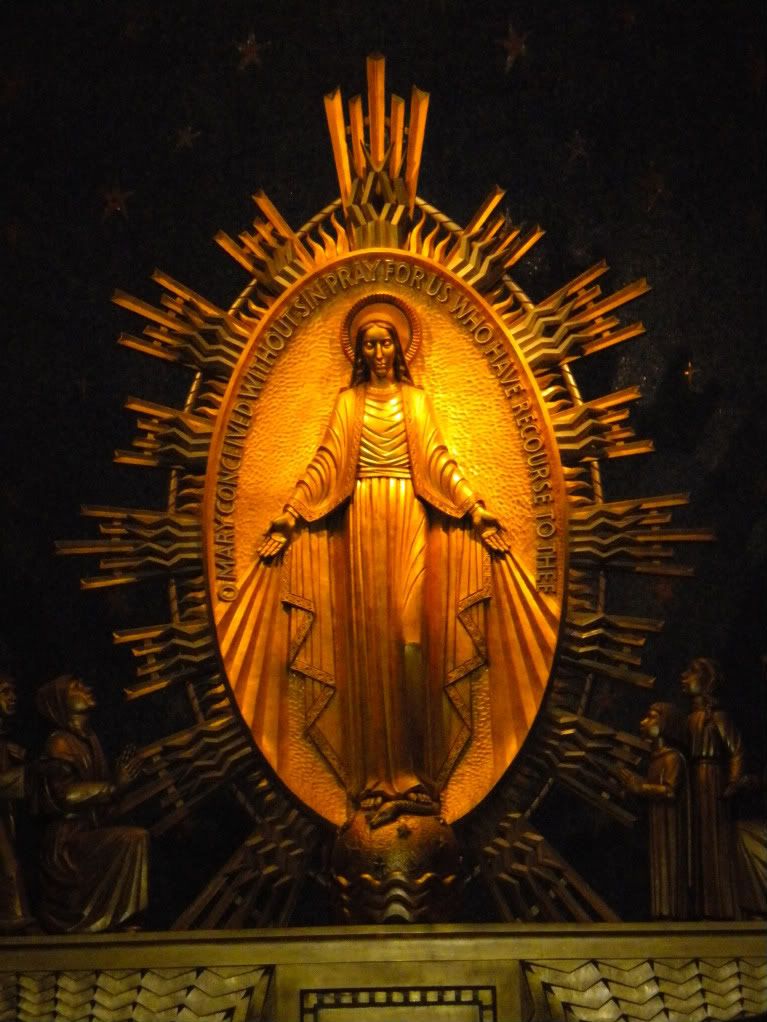
 Joann Nelander Studio